Por qué lloras más con la cebolla que tus vecinos

发布于 2026年06月27日 | 从西班牙语翻译

一项科学研究聚焦于一个普遍的家庭戏剧:切洋葱时流泪。这远非个人缺陷,研究揭示,流泪的强度取决于每个人对化学物质的个体敏感度。如果您泪流成河,而您的同伴却毫不动容,科学为您正名:这是正常的,无需自责(除了洋葱本身)。
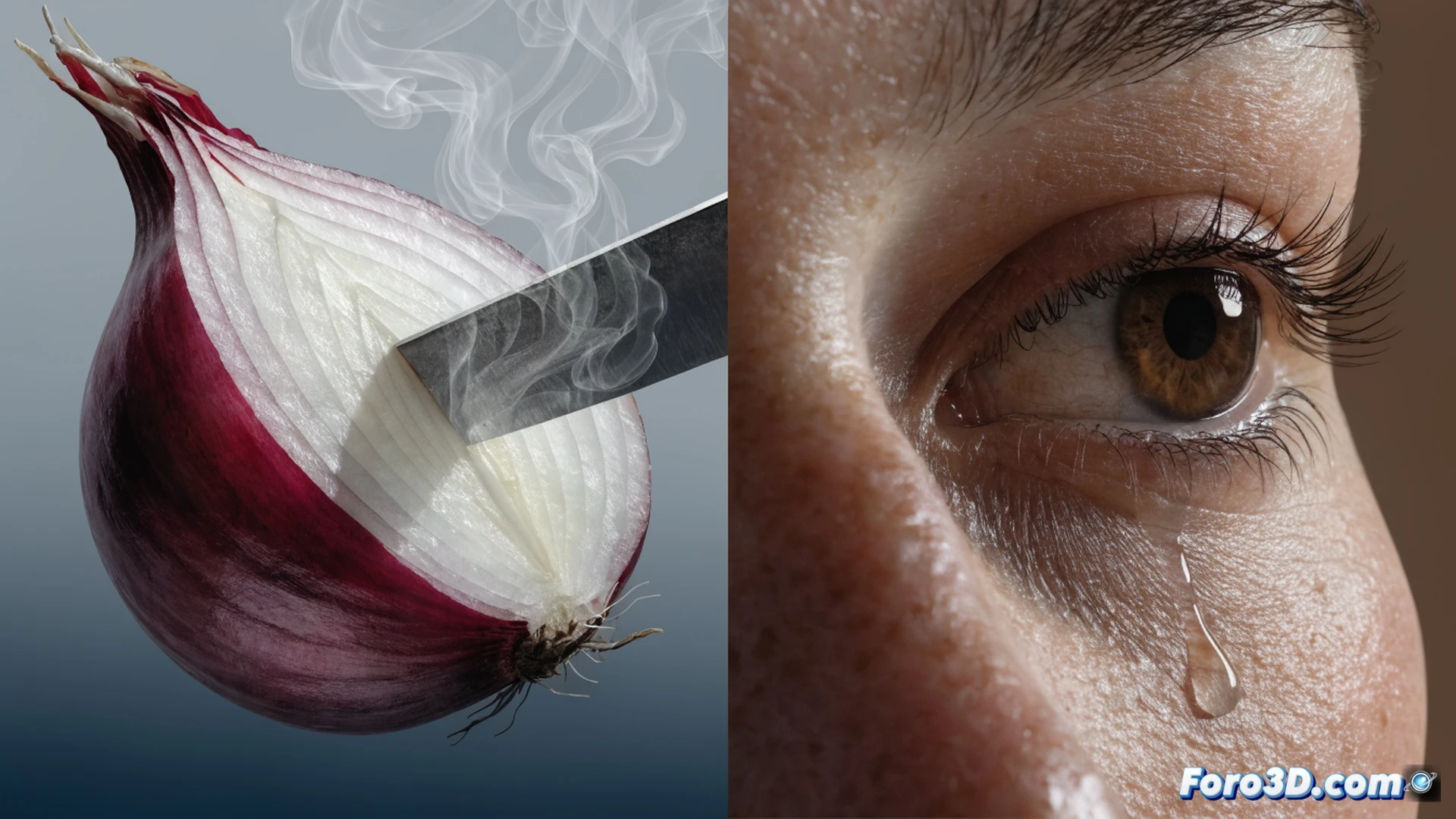
Photorealistic technical illustration of a person cutting a yellow onion on a wooden cutting board, tears streaming down their face while a second person beside them remains unaffected with dry eyes, molecular scale chemical particles rising from the onion surface, glowing microscopic syn-propanethial-S-oxide molecules interacting with ocular nerve receptors shown as luminous blue pathways, knife blade reflecting kitchen light, scientific laboratory environment with beakers and pipettes in background, cinematic dramatic lighting, ultra-detailed skin texture and tear droplets, engineering visualization style, high contrast shadows emphasizing chemical sensitivity process

流泪的化学原理:敏感性与酶 🧅

其机制众所周知:切洋葱时,会释放出刺激性气体syn-丙硫醛-S-氧化物,该化合物与眼睛的湿气反应,形成稀释的硫酸。该研究的新颖之处在于,它分析了催泪合成酶产量的变异性,以及每只角膜再生保护性泪液层的能力。三叉神经受体密度较高或角膜刺激阈值较低的人,会表现出更强烈的反应。这不是用户的技术故障,而是出厂设置

剧透:不,您并非洋葱的“天选之人” 😢

别担心,这既不是发现了超能力,也不是什么吉普赛诅咒。只是您的眼睛比一般人更敏感,就像有人皮肤薄,或者容易被洗衣粉广告感动一样。洋葱并不特别针对您;它是一种民主的蔬菜,攻击所有人,只是有些人被击中得更准。下次流泪时,请记住:这不是软弱,而是发生在您脸上的化学