三维牙冠层厚:牙医无法掌控的调整

发布于 2026年06月09日 | 从西班牙语翻译

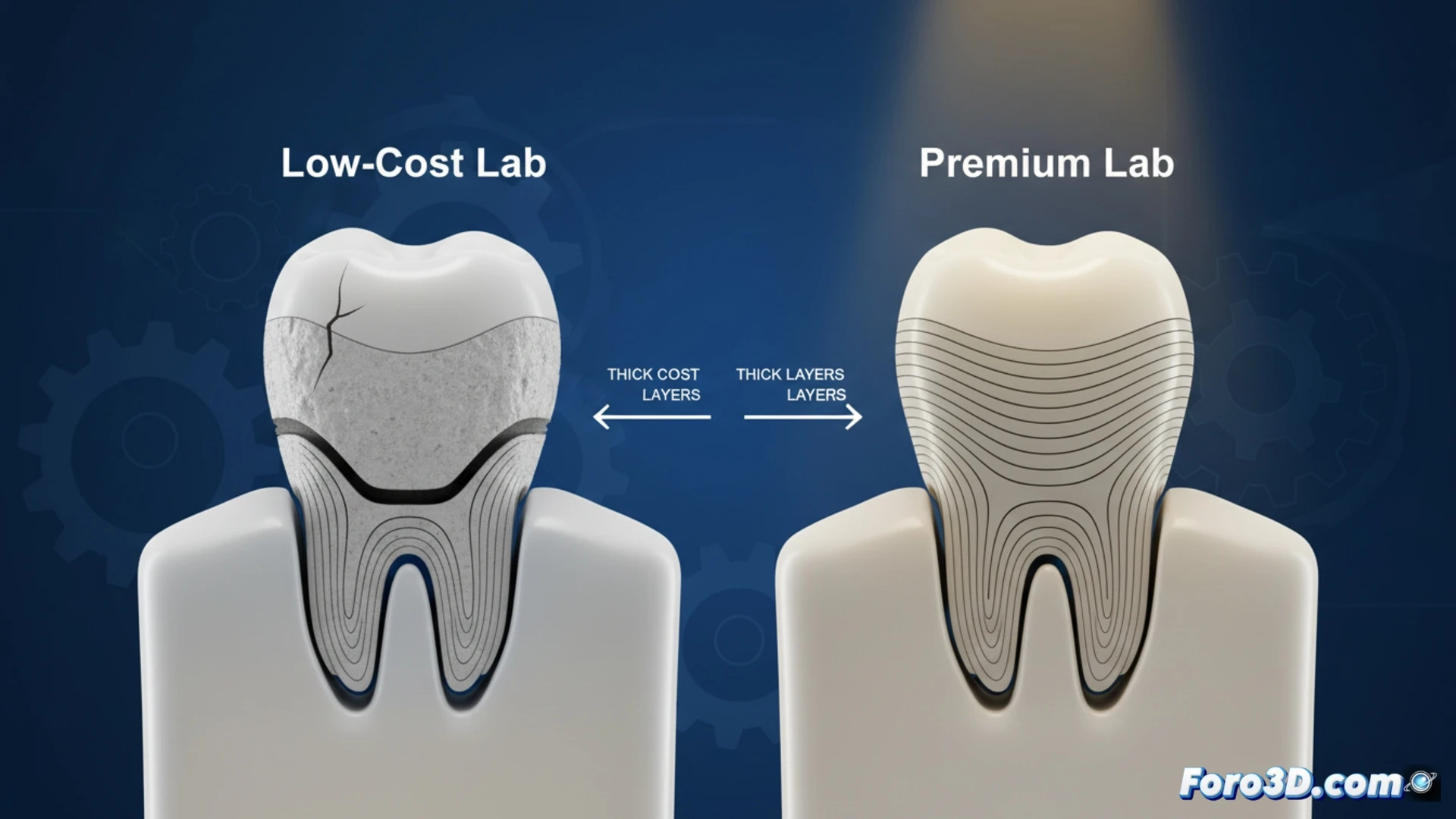
一项近期研究证实,3D打印牙冠的层厚决定了其贴合度与耐用性。然而,你在新闻标题中看不到的事实是:许多低成本实验室刻意避免使用薄层,因为这会延长生产时间。患者支付更少的费用,但牙冠在数月内就会松动或断裂。这项研究由一家扫描仪公司资助,其目的是推销更精密的设备,而非改善你的口腔健康。
Photorealistic technical illustration of a 3D-printed dental crown cross-section, showing multiple thin layers separating and cracking under pressure, a robotic dental arm applying force with a precision gauge, digital caliper measuring layer thickness on a monitor displaying CAD software with highlighted stress points, broken crown fragments falling onto a laboratory workbench next to a low-cost printer with a timer showing extended production delay, cinematic lighting emphasizing the fragile layered structure, engineering visualization style, ultra-detailed ceramic texture, sharp focus on failure zones.

技术精度 vs. 生产速度 🦷

大多数低端牙科3D打印机无法在不将打印时间翻倍的情况下达到最佳层厚(25至50微米)。以价格竞争为导向的实验室选择100微米的层厚,牺牲了边缘封闭性。许多国家并未强制执行针对打印牙科修复体的ISO 12836标准。全科牙医缺乏验证打印牙冠是否符合该标准的培训。技术的发展速度超过了监管的更新速度。

低成本牙冠:牙医的“摇钱树” 💸

商业模式很简单:以半价提供打印牙冠,患者满意地戴上。十二个月后,牙冠脱落或开裂。患者再次回到诊所,为新的牙冠(这次可能是铣削的)再次付费,循环往复。就像刨花板家具一样,便宜没好货。但至少,实验室每层节省了几秒钟。患者的健康是“即时生产”模式所隐藏的成本。